Posts

Fallow Scour or Flooded Soil Syndrome (FSFSS)

Image
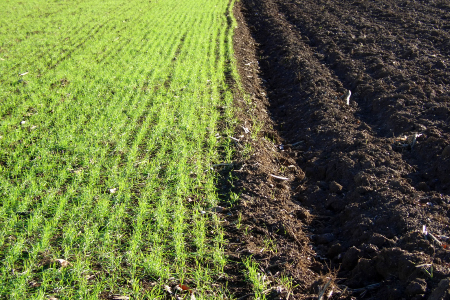
James J. Hoorman Hoorman Soil Health Services Fallow, Scour, or Flooded Soil Syndrome (FSFSS) occurs on preventive planted acres without a cover crop or flooded fields with no crop grown for extended periods. Generally, corn and small grains are the most often affected but soybeans can also be hurt. At Dekalb corn plots in Perrysburg, Ohio; FSFSS syndromes were seen this year with corn being 8 to 15 inches shorter and less vigorous. FSFSS occurs because phosphorus (P) and/or zinc (Zn) are not available due to the decline in soil Arbuscular Mycorrhizae Fungus (AMF). The AMF form a hyphae soil network (like a spider web) extending the reach of roots as much as 6-18 inches; absorbing water, macro, and micro-nutrients in exchange for plant root sugars. FSFSS occurs because without live host plants during fallow periods, AMF hyphae have to reestablish and/or reproduce from spores next year. This process can take several months, so P lacking corn symptoms may be visible into July or even lon...

Interview for the National No-Till Educator of the Year Award

Image
Photos from Randall Reeder at Nathan Brause farm.  We are being interviewed by Matt Reese.  Nathan Brause is the Ohio No-till Council Innovative Farmer of the Year. I am being interviewed for the National No-till Educator of the Year Award.

Tillage is Like a Drug Addiction

Image
  Tillage is Like a Drug Addiction By James J. Hoorman “Strangely enough, they have a mind to till the soil and the love of possessions is a disease within them.” Sitting Bull Civilization and the world population started increasing when humans began growing their own food to feed themselves and their livestock rather than pursuing and hunting wild game. The first human cultivation of crops probably was no-till, requiring very little cultivation. The first crops for human consumption may have been with a stick to create a hole and a seed bed for a kernel of grain. With time, our early human ancestors used livestock to speed up the planting of crops. Tilling the soil had many early advantages. Tillage killed the weeds (short term) and reduced the competition for water and nutrients. Tillage increased seed to soil contact and helped with seed germination. Tillage also aerated the soil and increased the mineralization and release of soil nutrients and resulted in increased crop yields...

Are USA Soil Erosion Rates Sustainable?

Image
  Are USA Soil Erosion Rates Sustainable? By James J. Hoorman “The nation that destroys its soil, destroys itself.” Franklin Delano Roosevelt Soil is a gift of life and the basis for modern civilization. The soil provides humans with food, fiber for clothes, shelter (wood, bricks, metals), foundation for our buildings, medicines, and a place to live and play. The Natural Resource Conservation Service (NRCS) started as the Soil Erosion Service in 1933 as a part of the United States Department of Agriculture (USDA) under the direction of Hammond Bennett. During the Dust Bowl days and the 1930’3 Depression Era, soil and wind erosion was a major problem with erosion rates of 30-50 tons of topsoil lost per acre per year. Blowing wind and water erosion were rampant throughout the country, displacing millions of tons of soil annually. To reduce soil erosion, various conservation practices were utilized and implemented throughout the 20th century. In the 1980’s, conservation tillage practi...