Posts

Soil Health Indicators
Image
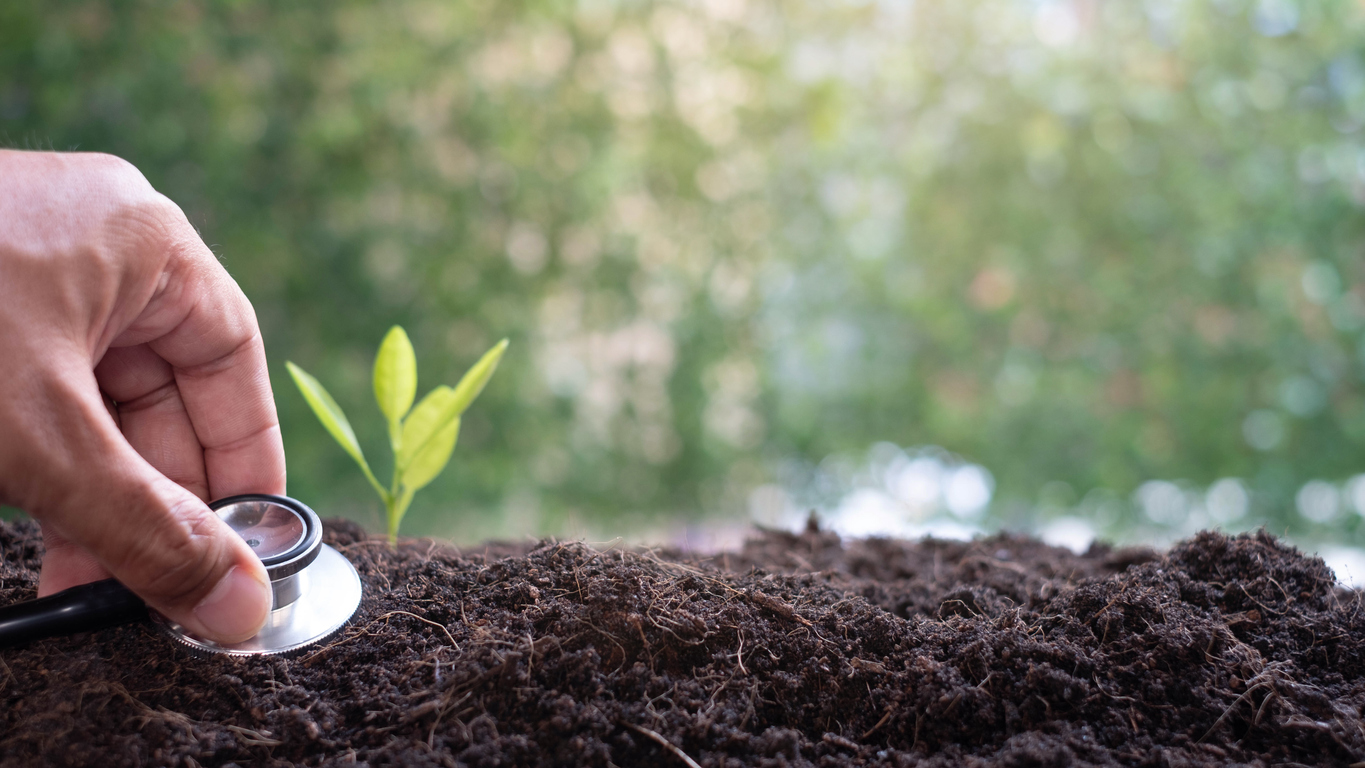
How do I know if my soil is healthy and what are indicators of soil health ? Plants thrive in healthy soils and are not overtaken by pests (weeds, insects, diseases). Weeds are the first colonizers of unhealthy, compacted or newly formed soils. Usually something is missing (soil organic matter (SOM), a certain nutrient, soil too tight) and weeds thrive under these conditions until the condition improves. Insect and disease pest also thrive, because the plant is sick and easy prey. Just like the lion or wolf in the wild, the sick and weak are consumed. Healthy soils have deep loose soil for good root growth. The soil should be dark in color meaning that the soil has plenty of SOM. Healthy soil should be slightly moist, crumble, have soil aggregates that fall apart, and have an “earthy” smell. When it rains, the aggregates should stick together and not turn to mud. Soil that turns to mud in water is composed of mostly microaggregates. When microaggregates become sticky and clump together...
The Smell of Rain and Microbes

Image
After a dry summer, the smell of rain is often refreshing but maybe a little less so to farmers at harvest time! People can often sense it is going to rain. This “pre-rain” smell comes from ozone formed when oxygen (O2) in the atmosphere is spilt through electrical charges in the clouds to form ozone (O3). Ozone is blown down from the upper atmosphere and has a sharp odor, somewhat like chlorine or burnt wires. This pre-rain smell is a good indication a storm is brewing before the pleasant smell of rain occurs. Recent research shows that the smell of rain is caused by soil actinomycetes or actinbacteria. Scientist have a name for it called petrichlor (pronounced pet-try-cure). As rain infiltrates the soil, it causes the actinomycetes to form spores which are released along with geosmin, a chemical that creates that earthy soil smell when soil is tilled. Geosmin and petrichlor are especially more intense in healthy soils, due to higher soil microbial activity. If a soil is unhealthy wit...

Planting Cover Crops Late

Image
As harvest progresses, its not too late to plant cover crops, but the options are becoming more limited. Most cover crops need a minimum of 60 days of growth before cold freezing winter weather limits growth. Rape seed, kale, and cereal rye are three cover crop varieties that can be planted later than most cover crops that are cold sensitive. The key is getting them planted as soon as possible. Rape seed and kale are small seeded brassica cover crops that can be broadcast or drilled. The seeding rate is generally 3-5 pounds per acre by themselves, requiring a .25 to .5-inch seeding depth, and they emerge in 4-10 days. These two brassicas can germinate at 410 F and grow quite rapidly in the fall and can still be planted in late October. The biggest disadvantage to planting either rape seed or kale before corn is that they do not promote the beneficial mycorrhizal fungi in the soil, so farmers may see a 5-10 corn bushel decrease. Soybeans yield reductions generally are not a problem. Rap...

Reducing Nitrogen Runoff

Image
After a dry summer, reduced corn yields generally results in excess soil nitrogen (N) and excess N leaching in the fall, winter, and spring. Most farmers fertilize for maximum yields and hope that the weather cooperates. When corn yields are reduced due to drought, the excess N that was applied is often lost through leaching when the rains return or it may be lost to the atmosphere as ammonia gas under saturated soil conditions through denitrification. Soil N runoff is lost at 100X higher rates than soil phosphorus and N is a major pollutant in Lake Erie and the Mississippi River. Keeping nitrogen in the soil should be a major goal of every farmer, so keeping N in a form that is both plant available but not soluble would be a great accomplishment. Microbially bound N is both plant available but also not soluble. When soils get dry, N is often not plant available but when these soils finally get wet, the soluble N can be lost by leaching or denitrification. The best way to reduce these ...