Posts

Showing posts with the label no-till

Logical Farm Changes

Image
  Farm logic is hard to define and put into use. Before Albert Einstein died, a reporter interviewed him. He decided to ask: Define Logic? Albert Einstein answered with a question: What does Logic mean? Einstein shared this story. “Two men entered a chimney to clean it. One man comes out with a dirty face, the second comes out with a clean face. Using logic, which man will clean his face?” The reporter replied quickly, “The man with the dirty face!” Einstein answered, “NO. You are wrong! The man with the dirty face will look at the man with the clean face and assume his face is clean. He will d o nothing. The man with the clean face will look at the man with the dirty face and assume his face is dirty, and he will clean, wash and scrub his face, even though it is already clean.” The reporter thought for a moment, agreed, and said, “That sounds logical!” Einstein just shook his head and said, “NO! You are wrong again! First, there is nothing logical about two men entering a chimney ...

Survey of Farming Practices

Image
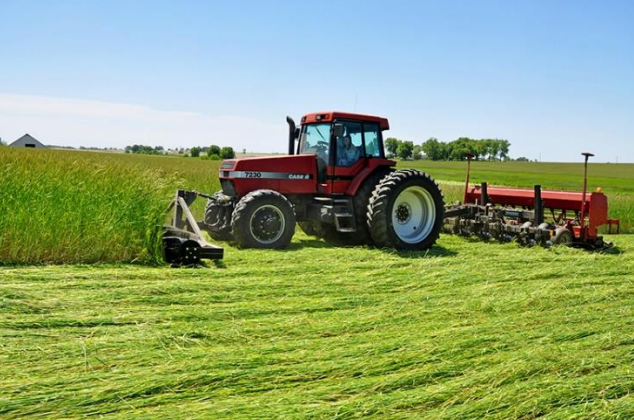
Three years of national survey results have now been collected on farmers who no-till. No-Till farming magazine recently shared these 2nd half results. Farmers use a lot of different equipment, different brands, and different sizes. A major change has been the switch to larger corn planters. No-till and probably most farmers are switching to 16-row (40 foot) corn planters 31.2% up 3.9%, 24-row (18.2%) while 12 row planters have fallen from 28.4% to 23.7%. While farmers have less money to invest due to lower prices and weather concerns, equipment is always a major expense on every crop farm.  On no-till planter attachments, farmers use coulters out front (38.4%), row cleaners (67.6%), closing wheels (86.5%), seed firmer (64.2%), down pressure systems (57.5%), pop-up fertilizer applicators (31.5%), and 2” X 2” fertilizer placement (34.7%). On soybeans, narrow row (7-10” row spacing) are common in the East but less common in the South and West. About 54.2% of farmers use 15-inch rows...

Dwayne Beck Insights

Image
Dr. Dwayne Beck, retired researcher, shared insights on arid farming at the Louisville National No-till meeting last week. Dwayne Beck managed the Dakotas Lake Research Farm in Pierre, SD for many years. Here are some insights.  Dr Beck says that doing things in an environmentally good way is almost always the most profitable! Mother Nature designed it so that nutrients and diversity are always preserved. Weeds and diseases are Mother Nature’s way of adding diversity. Nature always wants something growing, so weeds proliferate on bare soils. When there is not enough diversity, diseases cause the main crop to fail so that other plants can grow. It’s a natural balance.  High disturbance causes weeds to grow. Soils are full of weed seed, so disturbance brings those weed seeds to the surface to grow. In South Dakota, no-till decreases weed species by almost 60% (225 species on conventional tilled to 94 on no-till). When a 4-way crop rotation was used, the reduction was 85% (44 spe...

Profitable Transition to No-till

Image
  Farmers and researchers often say it takes 3-5-7 years or longer to convert to no-till before the yields and profits are the same or return back to normal. When crop prices are low, that makes it harder to switch from conventional tillage to no-till crops. Soybeans and wheat are the easiest to convert, but for corn, the yield lag may be 10-20%, which makes the conversion unprofitable. However, some farmers and researchers are making the conversion without a yield lag. With less fuel, equipment, and labor needed; no-till farming practices become much more profitable than conventional crops. Also, the environmental benefits to building soil organic matter and keeping soil in place are added incentives. Since it is a risky to change and with decreased profit expected, any yield lag prevents most farmers from considering a transition. Even short-term yield losses and lower profit are hard to justify even if someone says your future rewards will be higher. That is why the conversion t...

New Weed Resistance

Image
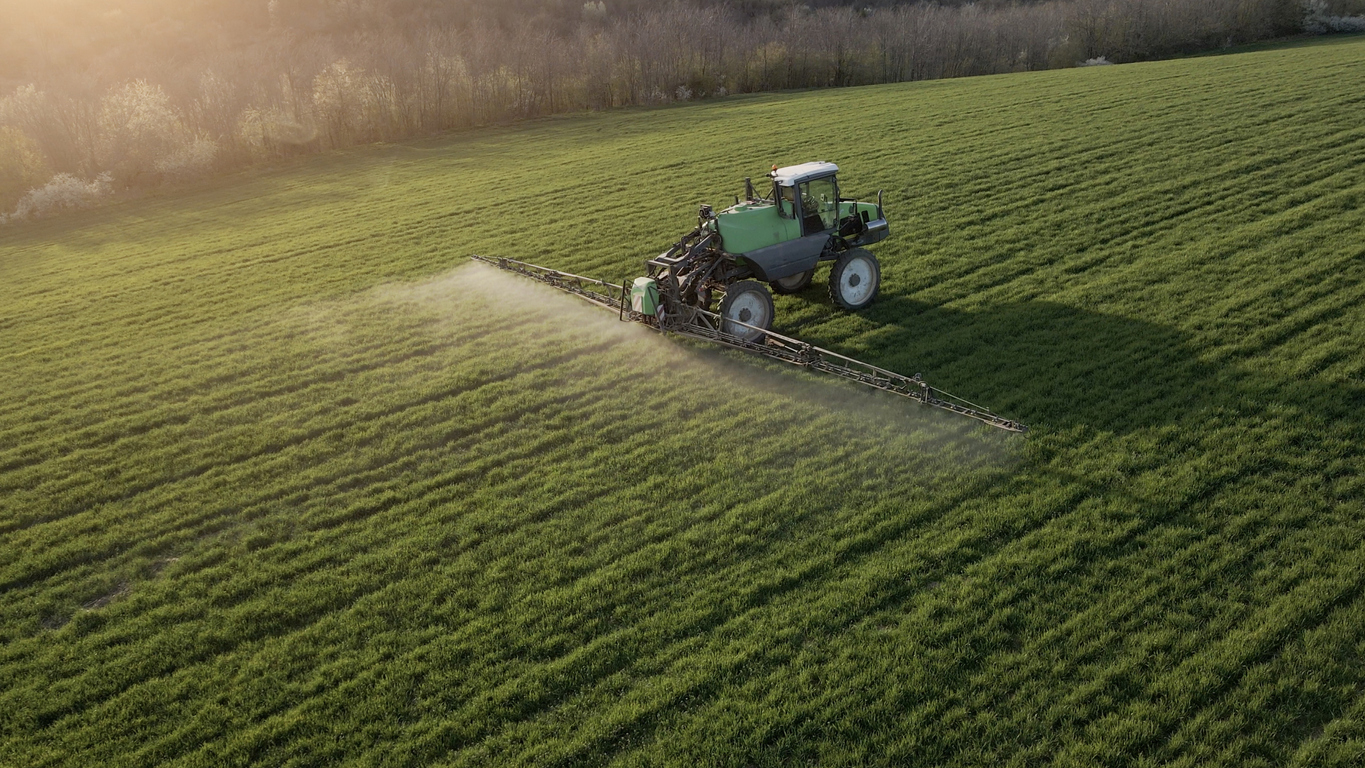
  Farmer have a new type of weed resistance to worry about. Farmers have been using herbicide or chemical weed control for many years. Weeds have learned several ways to get around herbicides in order to survive. While it is recommended that farmers rotate different groups of herbicides and use full rates, sometimes that does not happen and weeds become herbicide resistant. That has been the main way weeds like pigweed, water hemp, and mares tail have become weed resistant. Some weeds have become resistant to one or several groups of herbicides and now some weeds have even learned to become resistant to almost any herbicide. That is a scary proposition! Often farmers use several passes of herbicides with different modes of action (MOA’s) to control weeds. The goal is to reduce the weed population down to zero so that no survivors pass on any genes that are resistant. The problem is that there are millions of weed seeds in an acre of land, stored over many years. So weed seed is alw...

Tips for First Time No-tillers

Image
  Tips for First Time No-tillers Veteran no-tillers know that no-till farming offers several benefits including keeping soil in place, improved nutrient recycling; savings on labor and fuel; and improved water infiltration, water storage, and drought resiliency. No-till means that farmers plant into an undisturbed soil that is teaming with microbes. Beneficial microbes prefer a stable environment to grow, so soil health improves over time. High fuel prices, high inputs costs for chemicals and fertilizer, labor shortages, and weather issues are starting to make no-till farming more appealing. Getting started in no-till can be challenging because it is a different system and it takes time to learn new skills. Here are some tips for getting started. First, it helps to solve some of your existing problems. Make sure you have adequate drainage, take care of the weeds, and soil tests to address fertility issues. Do not forget to check on micronutrient levels. No-till can help with these ...

How No-Till Improves Land Values

Image
  No-till Farmer (farming magazine) recently put together a report: How No-till Improves Land Values. This report put an economic value on conservation farming practices that improve the environment, but also preserves our soil. While farmers own the land and have the right to farm it how they choose; long-term, society has an interest in preserving the land for future generations. Here are some results of research on the benefits of no-till to society. An organization called Rural Investment for Protecting our Environment (RIPE) came up with $112 per acre as the value associated with no-till farming. This included $7 for increased carbon sequestration, $16 for improved air quality and human health, $25 for better water quality, and $44 for improved soil nutrient management; all on a per acre basis. No-till Farmer has been documenting farmer benefits for 25 years with farmers indicated they saved $25-$90 per acre in reduced production costs. A conservative figure is $30/A on averag...

First Time No-Tillers

Image
  As the national price of diesel fuel averages around $5.40/gallon, many farmers are considering no-tilling both soybeans and corn for the first time. Also, due to wet weather and a late planting window, getting crop seed in the ground becomes even more important. Here are a few tips that may help improve your first year no-till crop yields. First, scout your fields. Weeds like purple dead nettle, henbit, dandelion, chickweed, yellow rocket, ragweed and marestail can be problems and require a good burndown herbicide. Most farmers will use glyphosate (Roundup®)but remember that as a chelator, glyphosate ties up many micronutrients, especially iron, manganese, zinc, and copper, so minimize it use. Second, check for slugs and other pests, especially in weedy fields. Ferroyx® is a new slug bait that has a 40-day residual. The pellets are very small and the slugs ingest it. The rate is 10- 15#/A and costs $11-$16/A. If you are not sure how many slugs you have, place a few boards or shi...

How and When to Plant No-till

Image
  Planting no-till can be tricky and scary! Successful no-till depends on having fully functioning healthy soils and efficient nitrogen (N) recycling. Fully functioning soils have higher soil organic matter (SOM) especially the active carbon, sugars, and root exudates from live roots that allows the soil to crumble. This leads to good soil structure, improved drainage, increases water infiltration, and higher soil gas exchange. This aerobic (more oxygen) environment plus the food source (live cover crop (CC) roots) changes the microbial community from one dominated by bacteria (conventional soils, often anaerobic (no oxygen)) to a balanced system with beneficial fungi (mycorrhizal), good nematodes, healthy aerobic bacteria, and protozoa. The “no-till time line” or transition period is often 3-7 years depending upon how fast and aggressive cover crops, continuous no-till, and manure have been used to promote a fully functioning healthy soil. Soybeans are hardy, easy, and most simple...

Making No-Till Corn Succeed

Image
Record no-till corn yields (616 bushel/acre, Dave Hula, Virginia) have been achieved by understanding what it takes to make no-till corn succeed! Nationally, no-till corn acres are less than 10% (average 5-7%). Corn needs nitrogen (N) and other nutrients at critical times to produce high yields. Scientist estimate that corn could potentially produce 1100 bushel/acre, but averages 200 bushels or less. The first 10-14 days after corn planting determines most corn yield. Factors that harm the corn seedling at this time may reduce the corn harvested. Traditionally, tillage warmed the soil and created good seed-to-soil contact. Each tillage operation reduces soil moisture 0.5 to 1.0 inch. Water holds 10X the cold/heat as air, so reducing cold water improves corn germination. Spring tillage also aerates and stimulates microbes to release carbon and nutrients while killing some early germinating weed seed. Corn generally benefits from tillage, giving corn an extra boost during that critical 1...

Recognizing Stalwarts in the No-Till, Soil Health Movement

Image
The 24th class of No-Till Innovators have supported the adoption of cover crops, better nutrient management, improved soil health and timely, educational events and opportunities. Three individuals and one organization are being recognized as the 24th class of No-Till Innovators for their commitment to the advancement of no-till farming systems in North America and worldwide. The No-Till Innovator Award program — sponsored by Calmer Corn Heads and No-Till Farmer — strives to honor farmers, researchers, businesses and services, and organizations for their work in assisting the growth of no-till practices, regardless of the types of crops or equipment used. The 2019 honorees are: James Hoorman — retired NRCS, Ohio State Extension educator, Research & Education Ralph Upton Jr. — Springerton, Ill., no-tiller, Crop Production Ray Ward — Ward Laboratories, Business & Service South Dakota No-Till Assn. — Organization James Hoorman — Research & Education James Hoorman is one of the...

Interview for the National No-Till Educator of the Year Award

Image
Photos from Randall Reeder at Nathan Brause farm.  We are being interviewed by Matt Reese.  Nathan Brause is the Ohio No-till Council Innovative Farmer of the Year. I am being interviewed for the National No-till Educator of the Year Award.

No-till and Soil Compaction Struggles

Image
Several farmers commented that no-till soybeans in corn stalks really struggled this year. Where they tilled the corn stalks, they think the soybeans are yielding better. That could be why farmers appear to be doing more tillage this year. If you attended Nutrient Management Certification, they heard that phosphorous needs to be “incorporated”. I prefer the term injected, because if you tell a farmer he needs to “incorporate” his fertilizer, most times they want to get out the plow! Unfortunately, that is the wrong message. Fertilizer needs to come in contact with the soil, and banding phosphorus fertilizer with starter fertilizer is a better management tool, then massive tillage. Aggressive tillage is going to lead to more soil erosion and increased water runoff, and unfortunately, higher soluble phosphorus in our surface water. So how should farmers deal with cold wet soils in the spring? In 2014, we had a cold winter that lingered into spring. When farmers till a soil, they dry it o...

No-till Corn Planting

Image
  Many farmers are now just starting to plant corn. For Northern Ohio, the ideal time to plant corn is late April until May 10 for optimal corn yields. In the Midwest, estimated yield losses for corn are about 0.3% per day initially reaching about 1% loss per day by the end May (Nielsen, 2013). Yield losses are based on many factors including the risks of hot dry conditions during pollination, insect and diseases pressures, and a shorter growing season; which may or may not occur. In 2010-2011, late planted crops produced great yields because of timely summer rains. According to Peter Thomison, OSU corn specialist, “Lower grain yields are not a certainty with late plantings. While delayed planting may cause slightly lower yields, planting date is just one of many factors that influence corn yield. Weather conditions (rainfall and temperature) in July and August are probably the most important yield factors. However, if late planted crops experience severe moisture stress during pol...