Posts

Showing posts with the label cover crops

Cover Crop Variety Research

Image
  On July 1, 2025, Ohio Governor Mike DeWine signed a new bill refunding the Ohio H2O Program. However, the 2024-2025 budget was for 270 million dollars. The new bill authorizes only $165 million dollars for the 2026-2027 time period, a 40% overall decrease. The Ohio H2O program will continue but expect major changes and possibly lower rates of compensation. Dr. Etienne Sutton, University of Michigan, at a recent field day shared some national research on cover crop varieties. This research was conducted in 12 states across the country. Ohio was not included; however, both Indiana (Purdue, West Lafayette) and Pennsylvania (Penn State, College Station) participated in the study. The goals were to evaluate performance of commercially available cover crop varieties, determine where they work the best, and try to get more cover crop diversity. Plots were very small (5 feet by 15 feet), replicated 3 times, and generally done on one soil type. In Ohio, it is not uncommon to have multip...

Cover Crop Research

Image
  Dr. Etienne Sutton, University of Michigan conducted cover crop research for 3 years. She got her PHD and she shared research results at a field day in Williams County on the Allen Dean farm. Her research centered on getting more cover crop biomass and either tying up nitrogen (N) and phosphorus (P) or creating more N. For the last 3 years (2022-2025), she monitored cover crop fields in Michigan, Ohio, Indiana, Illinois and Minnesota. A total of 125 fields (2022), 138 in 2023, and 281 in 2025. The majority of the fields were cereal rye (121 fields) and cover crop mixtures (117) with the remaining being grass and legume or clover cover crop fields. Almost all the cover crops (88%) were planted after regular field crops with less than 10 percent after vegetable crops. About 52% were drilled, 32% broadcast, and the rest were aerially applied (drone or plain). Her major research centered around maximizing biomass and increasing N content or uptake in cover crop biomass (CCB). ...

Farmer Mimics Mother Nature

Image
  With the Fourth of July holiday, it is nice to meet family and friends and reflect on life and the blessings we have in this country.  It is also nice to hear and learn how some successful family farms that are thriving.  Here is a local story revised from Farm Journal and Ag Web.   Les Seiler and his family farm in northwest Ohio in Fulton county near the Michigan border.  The Seiler’s plant cover crops on every acre of land that is planted  with the goal of keeping a living root in the ground year-round.  They do that by mimicking Mother Nature, using no-till and cover crops to build soil health. The Seiler’s include Les and Jerry and their two sons farming near Fayette, Ohio.  Seiler’s started out strip tilling in the fall of 2010.  Unfortunately, the wind blew all winter and moved the black soil on some new land they had purchased off the mounds.  So that was the last strip tilling the family did.  They started no-tilling...

Survey of Farmers Using Cover Crops

Image
      Three years of national survey results have now been collected on farmers who no-till and use cover crops. No-Till Farming magazine shared these results recently. Around 80.5% of all no-till farmers use cover crops, which has been steady, although slightly less than the peak in 2023 at 83.2%. Weather—especially dry weather in the fall—and getting a crop established could be part of the reason for a slight decrease in cover crop acres. Also, as finances get tight, sometimes cover crop acres are easy to cut. Why do farmers use cover crops? The number one reason is still erosion control or prevention, followed by better soil biology and higher soil organic matter accumulation. The top three maximum benefits are still erosion prevention, followed by improved rainfall infiltration and then better soil biological activity. Higher yields and/or lower crop inputs were not in the top three, but often occur after numerous years of using no-till plus cover crops continuously. ...

Cover Crop Issues

Image
  A week of good weather has helped most farmers get crops planted. However, there are issues dealing with fast-growing cover crops (e.g., cereal rye). Due to a warm winter and spring, most crops, including wheat, are 2-3 weeks ahead in maturity. Fall-planted crops are all headed out and getting tall. How viable is the seed, and how do you manage those situations? On seed viability, cereal rye seed is viable 30 days after heading and flowering. Some cereal rye has been headed out for 2 weeks, so it’s time to get it terminated. Some rye is 4 to 6 feet tall, so shading is becoming another issue to consider. Balansa clover seed can remain viable in the soil for 3 years and reseed itself. Balansa and Crimson clover seed is viable 30 days after blooming. Hairy vetch seed can remain viable for 5 years in the soil (hard seed) and starts to mature around July 10, which may be July 1st this year. For all cover crops, terminating cover crops once they are 10-20% blooming reduces the chance o...

Cover Crop Termination

Image
This spring has been warmer than normal but Ohio’s subsoil moisture has been dry due to last year’s drought. Recent rains may have helped depending upon how much rain actually soaked in. Last year, adequate subsoil moisture allowed farmers to get decent yields, however; what about this year? According to the National Weather Service, there is a 83% chance for a transition from El Niño to La Niña during April-June and a 62% chance for La Niña to develop by June-August. Typically, El Niño years are drier while La Niña years tend to be wetter in the Midwest.  For Ohio, the 60-day weather forecast is for temperatures to be above normal in our area but perhaps drier than normal conditions around the Great Lakes. April may be wetter, but May is expected to turn dry. Farmer’s may be planting earlier than normal depending upon the weather. What about terminating cover crops? That depends upon soil moisture.  When dry conditions are expected, terminate cover crops early w...

Summer Cover Crops

Image
  Wheat harvest is mostly complete and many fields are being baled for straw. Some farmers have planted double crop soybeans, but with the sporadic rains, many fields are lying bare. Looking at the calendar, it’s too late to plant soybeans and bare fields just grow weeds! Another option is to plant a cover crop, depending upon your goals, and what crop will be planted next year. Cover crops planted in August have an advantage over fall planted cover crops. First, they capture more sunlight. Cover crops need at 60-90 days of growth before winter to survive. Second, if you spray the weeds first before you plant, there is less competition, so they produce better stands. Third, summer and fall rains allow cover crops to get better growth. Generally, what ever growth you get above ground is going to be matched below ground. For these reasons, planting cover crops after wheat has many advantages. To optimize cover crop growth, the best thing to do is bale the straw. It is not a deal brea...

Natural Cover Crop Termination

Image
  As the planting season progresses, many cover crops and weeds continue to grow. Letting cover crops grow may reduce soil moisture, improve soil structure, reduce dust storms, and add soil carbon. Crop rollers naturally kill cover crops by mechanically terminating (crimping) them. Crimpers are used to kill grass cover crops (cereal rye, oats, barley, whet, millets, sorghum species), vetches (hairy, common), annual clovers (crimson and balansa), brassicas (kale, rape), buckwheat, sunflowers, and multi-species cover crops. Crimpers do not work well with perennial cover crops like red clover, alfalfa, or annual ryegrass. Best results when the heads or flowers are in the “boot” or head stage, when mechanically crushing cover crop stems kills them. Crimping advantages include suppression of weeds by forming a natural mulch, reduced summer soil temperatures, it conserves soil moisture, decreases soil erosion, adds organic matter, and reduces blowing soil. Crimping cover crops works well...

Cover Crop Weed Control

Image
  A new study by Purdue University, Dr. Bill Johnson shows the benefits of cover crops for weed control. Cover crops are known to control grasses and marestail, but Dr. Johnson wanted to document other weed control benefits. For example, can you control weeds with out residual herbicides? What other weeds do cover crops control? Dr. Johnson found residual herbicides may not be needed if crop residue is high enough to suppress marestail and annual grasses weeds. For other broadleaf weeds, the cover crop residue was not enough to suppress broadleaf weeds. The cover crops plus residual herbicides were 100% effective at controlling weeds in his trials. Cocklebur was a problem weed which required the full rate of herbicide plus the cover crop residue to control it. Dr. Johnson discovered several other important weed facts about cover crops. Planting green or planting soybeans into cereal rye later had a much higher success rate than terminating the cover crop early. The Purdue research ...

Cover Crops: Good & Bad

Image
Farmers seem to either lover or hate cover crops. Cover crops have many benefits, but they may be hard to see immediately. First the bad or difficult things about cover crops will be discussed followed by the benefits. Cover crops cost money for seed, planting, and sometimes termination. It takes more knowledge and experience to plant cover crops and to use it with no-till (school of hard knocks), so its risky at first. The timeliness factor, getting cover crops planted on time and established is difficult. Herbicide carryover can be an issue and sometimes it requires different equipment (no-till, sprayers, spreaders) although less or no tillage equipment if used in a no-till system. Then there are the pests (slugs, voles, cutworms) that love a good feast. Cover crop residue may have an allelopathic or negative growing effect on the grain crop. It can be difficult to plant timely if soils stay cold and wet (sounds like a compaction problem) and sometimes planting is delayed and soil ge...

Improving Drainage with Cover Crops

Image
As the weather warms and snow melts, many fields are saturated with standing water. While cover crops may improve drainage, they are not a cure all. A farmer with no tile or subsurface drainage once asked why the cover crop’s he planted did not improve his drainage. Fields need an outlet for water to drain away whether that be surface drainage or subsurface (tile) drainage. Most plant roots do not grow in water, and when the water table is high, root growth is severely limited due to a lack of oxygen. Even cover crops needs some internal drainage to maximize root growth. Cover crops improve soil structure, add soil organic matter (SOM), and create root channels to move water into existing tile lines. Cover crops may make your existing drainage system work more efficiently. Many farmers today are splitting 40 to 50-foot tile lines that was installed years ago to improve drainage. Some farmers are finding that with good stands of cover crops, they can forgo splitting tile lines by improv...

Frost Seeding Cover Crops

Image
Frost seeding is broadcasting cover crop seed over a frozen soil surface and letting the freezing and thawing incorporate the seed into the soil profile. For hard seed (seed that is difficult to germinate), the freezing and thawing may break down the seed coat and improve germination. Most small grain fields (wheat, oats, barley, spelt) can be frost seeded but also fields that either had a poor cover crop stand or were not planted in the fall can also be frost seeded. Generally, small grain fields that have less than ideal stands are the best candidates for frost seeding cover crops. When the small grain crop is thick and yields are high, there is little sunlight and the grain competes with cover crop establishment.There are several benefits to frost seeding. Soil damage is minimized by driving on frozen ground with lighter vehicles. Small tractors and ATV’s with broadcast spreaders can cover a lot of ground very efficiently, which saves fuel. The best time to frost seed is early morni...

Sowing Cover Crops

Image
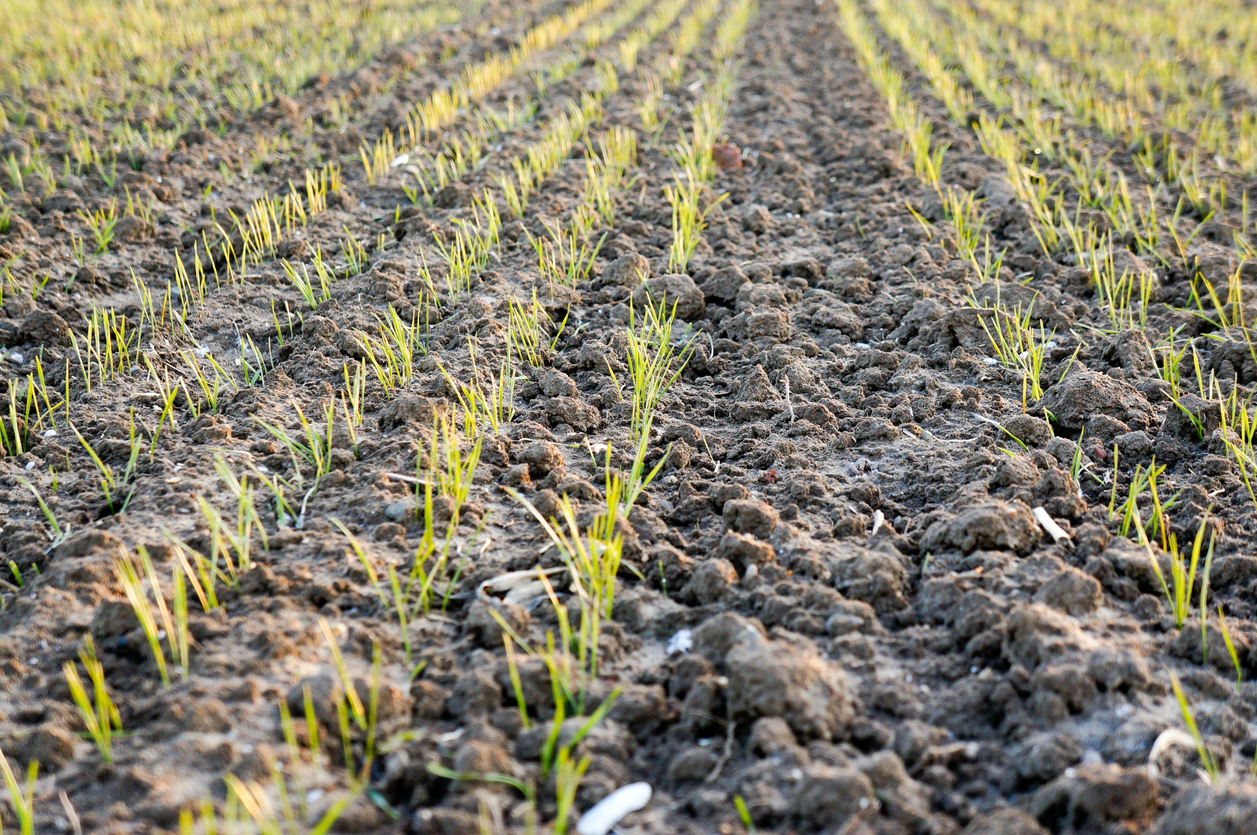
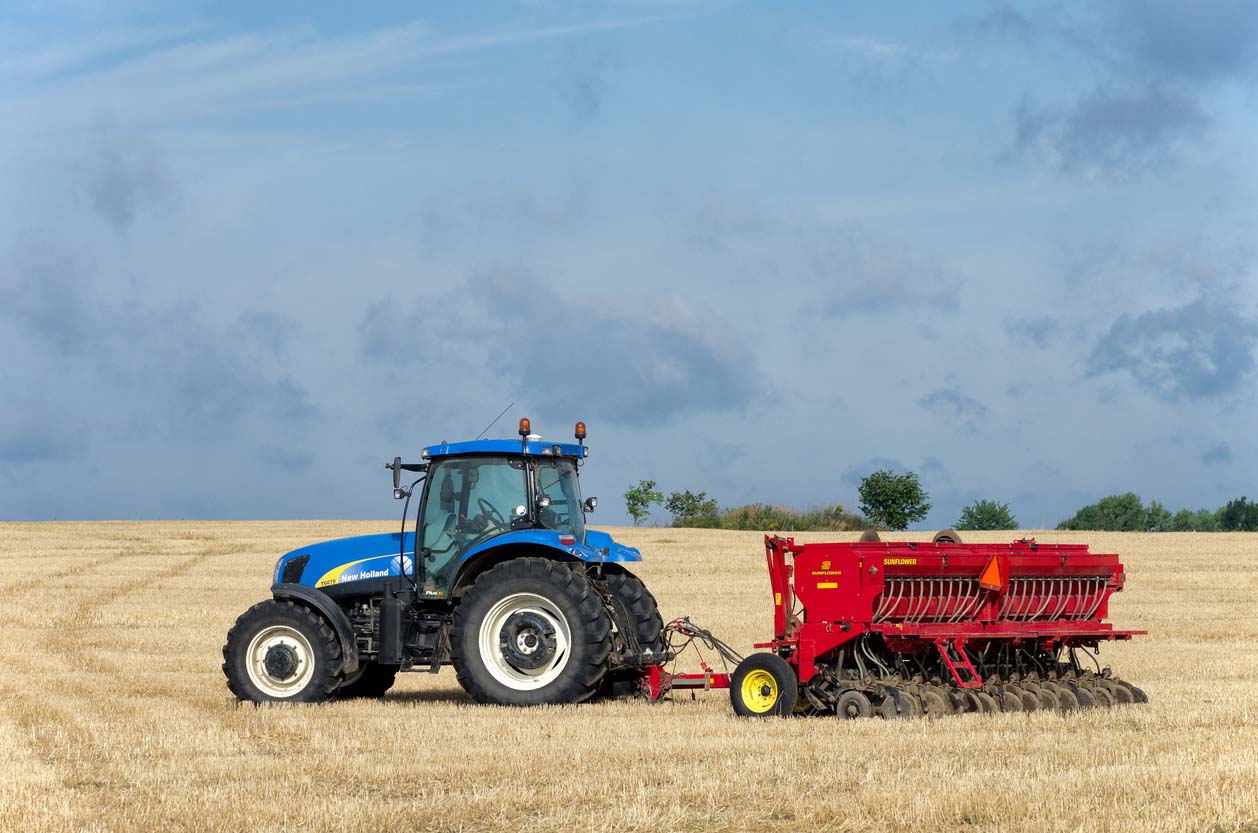
Late summer and early fall (August 1-Mid-September) is a great time to sow cover crops. Methods include broadcasting with an airplane, helicopter, high boy applicator, various types of spreaders OR seed incorporation with light tillage or a drill. Broadcast seeding rates need to be 10-20% higher and are highly dependent upon adequate moisture at planting. Incorporating or drilling the seed means sowing the cover crops after grain is harvested. Successful cover crop stands depends upon getting seed planted correctly. Using an airplane or even a helicopter is fast and economical. Airplanes have to avoid trees, telephone and power lines; so stands may be variable on the ends. Helicopters can hover but the whirling blades sometimes variably scatter the seed. In both methods, cover crop seed my end up in corn whorls or on neighboring fields. Broadcast seed can be eaten by voles, slugs, or earthworms which drag the seed down their burrows. Avoid broadcasting seed if the soil is excessively d...

Cover Crops Benefit Wildlife

Image
Cover crops provide many species of wildlife with food and shelter. If you want to maximize wildlife benefits, avoid cover crop monocultures. Cover crop diversity and interspersion are keys to improving wildlife habitat. For birds like quail and pheasant; nesting, brood-rearing, and escape cover are critical for bird survival, and these three types of cover need to be within 40 yards of each other for best interspersion (Zac Eddy, Senior Wildlife Biologist). For birds, high energy grain cover crops provide food and shelter (structural cover). Good bird cover crops should include warm season forage species planted after wheat harvest. Sorghum species can grow 6-9 feet tall and they lodge in the winter, providing excellent cover and food for quail, pheasant, and rabbits; even under heavy snow and ice. Warm-season cover crops like sorghums, millets, sunflowers and warm-season legumes such as cowpeas and Sunn hemp can be planted. Sorghums, millets and sunflowers are excellent seed producer...

Late Summer Early Fall Cover Crops

Image
Late summer and early fall are great opportunites to plant cover crops and improve soil health. Days are shorter, but with ample sunshine left and a little rain, cover crops grow quickly. Both summer annuals which die with the first frost and winter annuals can be grown. Legumes and clover which add soil nitrogen, all types of grasses for carbon, and brassicas to reduce soil compaction and reduce weeds all grow well at this time. After wheat, either bale or chop the straw and spray the weeds. Baling straw makes you more money than chopping straw. The high carbon content in wheat straw can reduce cover crop establishment and the by-products upon decomposition may be toxic to germinating cover crop seedlings. If possible, spray weeds with gramoxone (a dessicant) rather than glyphosate. Glyphosate reduces soil health and biology for several weeks and causes oxidizing microbes to make manganese unavailable while promoting Fusarium root diseases and weed resistance. Oats do the opposite, pr...

Forage Cover Crops

Image
Planting forage cover crops can be a beneficial food source and a place to apply manure. Grass cover crops like sorghum, Sudan, Sorghum-Sudan, cereal rye, annual ryegrass, millets, Teff, and oats are great forages that build organic matter, tie up manure nutrients, keep the soil from eroding, improve soil structure and still make great feed. Adding legumes like Balansa or crimson clover, winter peas, or vetches can increase crude protein (CP). Kale, radish, or turnips may be added at low seeding rates if the cover crop is grazed. Sorghum or Sudan hybrids are summer annual grasses that grow with little moisture and provide great tonnage. Deep fibrous roots break up soil compaction and add soil organic matter. Plant these varieties immediately after wheat or barley harvest and take an early first cutting or graze when the plants are 3-4 feet tall. Harvesting stimulates roots and tillering, adding 5-10X more roots and shoots. Manure increase the second and possibly third cutting before fr...

Wheat Straw and Cover Crops

Image
As wheat and barley harvest progresses, farmers often ask what should they do with wheat straw? Should I keep the straw on the field to build soil organic matter (SOM) or should I sell it? What is the value of the wheat straw and how many nutrients are being lost? Does straw residue hurt the next crop? Straw is a valuable resource in high demand for bedding or mulch and livestock farmers are even using straw to add fiber to their livestock rations. Fewer farmers are growing wheat today although some barley is being grown. At a minimum, straw sellers should consider the value of nutrients leaving the farm plus the value of the lost organic material plus the harvesting cost. The nutrient value of straw varies but 9-12 pounds of nitrogen (N), 3-4 pounds of phosphorus (P2O5) and 25-45 pounds of potassium (K2O) per ton can be lost on fields that yield 1-2 tons straw per acre. Based on N-P-K values of $.40-$.50-$.30 per pound, the nutrient value per ton varies for N from $3.60-$4.80, for P, ...

Crimping Cover Crops

Image
Crop roller “crimping” has become a common way to mechanically terminate cover crops. Crimpers are used to kill grass cover crops (cereal rye, barley, wheat, sorghum, Sudan, pearl millet), vetches (hairy and common), annual clovers (crimson and balansa), buckwheat, and multi-species cover crops. Crimpers do not work well with perennial cover crops like red clover, alfalfa, or annual ryegrass as a cover crop. The best results occur on annual cover crops when the heads or flowers are in the “boot” or head stage, near the end of the plant growth cycle. Crimpers are 16-inch rolling steel drums with blunt steel blades either tractor pulled or front mounted. As the crimper rolls through a cover crop, the blunt blade “crimps” or injures plant stems every 7 inches. The blades are usually curved or positioned in a “chevron” pattern at a 7- 100 angle to reduce bouncing, soil movement, and to increase maximum plant stem crimping pressure. If done properly, a 90-100% kill is possible without using...