Posts

Showing posts with the label soil test

Soil Testing Considerations

Image
  Fall and Spring are usually the time when farmers or fertilizer dealers take most soil tests to make recommendations for fertilizer applications. In the last several years, most dealers now do that service for their farmer clients. A few years ago, looking at soil test collected over several years, there was a big jump of .5 to 1.0% increase in soil organic matter (SOM) on all this no-till farmers fields. I started asking questions. He was already a no-tiller and using cover crops. Had he done anything different? No really. Then I asked who took the sample? He said the dealer. Who took them before? He said he had. Is there that much sampling difference between dealers and farmers? The biggest difference is that dealers use a machine (a soil sampler on a four-wheeler) while most farmers use a shovel or a probe. The standard procedure for collecting a soil sample 10 years ago was to wipe the soil surface clean of residue, then probe the soil, taking at least 10-15 samples in a rand...
Soil Test Interpretation

Image
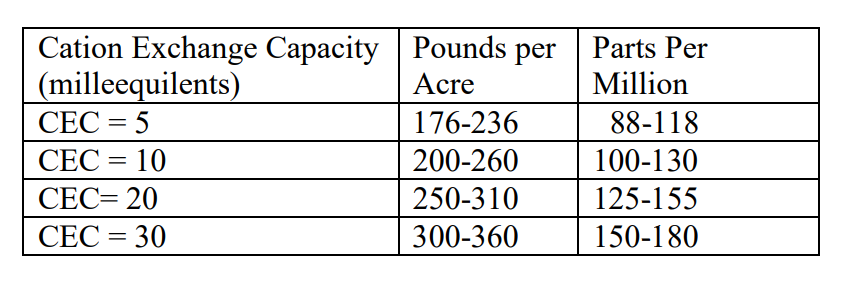
 After harvest, most farmers start planning for next year’s crop. Many farmers start by buying and applying fertilizer before the New Year, for income tax purposes. When deciding how much fertilizer to purchase, start with a good soil test. Greg LaBarge, Agronomy Field Specialist and Laura Lindsey, Assistant Professor, Soybeans and Small Grains Production recently wrote a new fact sheet entitled: Interpreting a Soil Test Report, AGF-514-12 which can be found on Ohioline. This fact sheet is the basis for this article. Most standardized soil test report values for pH, phosphorus (P), potassium (K), calcium (Ca), and magnesium (Mg). Soil test values are reported in Parts Per Million (PPM) or pounds per acre. The PPM times 2 equal pounds per acre. It is important to note that the soil test values do not actually tell us how many nutrients are in the soil, they indicate the relative nutrient available for crop production. There are generally much higher levels of nutrients in the soil; ...