Posts

Showing posts with the label fungicide

Phosphite: A Natural Fungicide

Image
Farmers struggle with two major types of fungal pathogens. First are the soil pathogens which thrive on newly planted crops, especially in cold wet soils planted early in the growing season. Second are the foliar leaf pathogens that generally affect plants later in the growing season. The following discussion is on the use of phosphite as a natural soil fungicide and bio-stimulant for early season soil fungal control and fast plant growth. What is the difference between phosphite and phosphate. Phosphate is an atom of phosphorus with four oxygens attached. Phosphates are what plants take up and use for the majority of their plant nutrition. Very stable, it is used in the plant cell wall, in DNA (genetic code) and RNA (messengers), and for energy transfer. The bad part about phosphate is that it may cause water quality concerns when it leaves the soil. Phosphite is an atom of phosphorus plus only three oxygens. It is much more mobile, both in the soil and in the plant, but highly reacti...
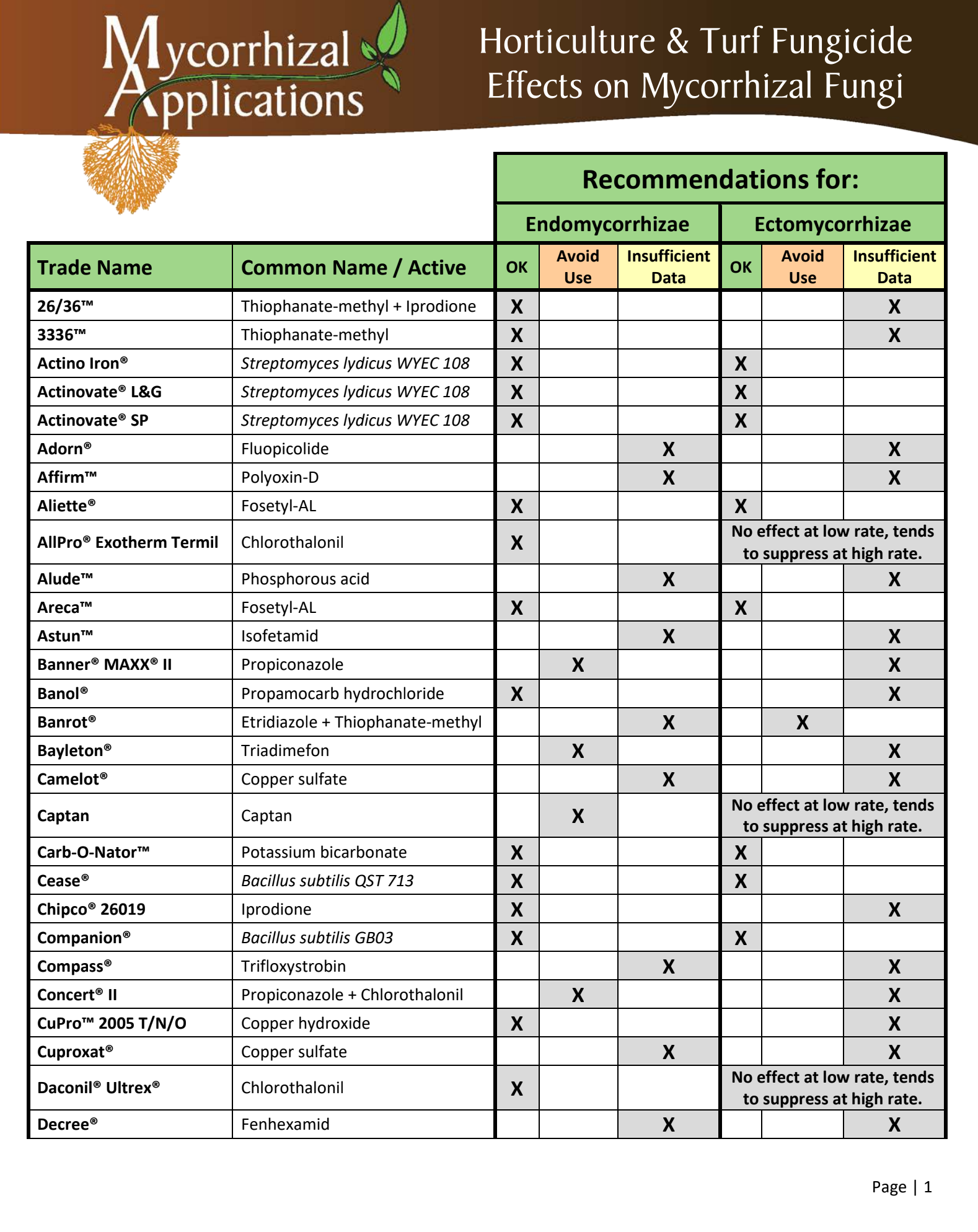
Horticulture & Turf Fungicide Effects on Mycorrhizal Fungi

Image
General Observations: *The longer the wait to apply any fungicide after mycorrhizal fungi inoculation, the better for the mycorrhizal fungi development. **Most foliar sprays of any fungicide (except systemics such as Bayleton) have little effect on mycorrhizal fungi. This chart is updated periodically, as new products are added, and results of new trials are published. Please visit  www.mycorrhizae.com or contact your Mycorrhizal Applications Representative for the latest version of this chart.

Corn Fungicide Use

Image
  With humid wet weather occurring comes the concern for corn fungal diseases. The goal of using fungicides is to optimize plant health and keep your corn crop alive to optimize crop yield. Healthy biologically active soils should be your foundation for healthy plants and yields. Fungicides should be used to enhancement and aid plant health—not a primary tool for growing healthy crops. There may not be a right answer to whether applying fungicides to healthy soils and plants is really needed or even profitable. Fungicides are commonly used to control of fungal pathogens by changing the activity and the number of soil microbes. Beneficial fungus breakdown and mineralize nutrients, making these nutrients plant available. Some foliar applied fungicides reach the soil and may have a negative effect on the soil microbial population. Crop scouting is critical so that fungicides are only used when necessary and fungus resistance does not occur. Most fungicides are broad spectrum meaning t...